
Terror over Turin.
The Royal Air Forces campaign against Italian targets 1940-1943.
The clear sky and warm afternoon sunshine was a deceptive omen. In the next few hours, the crew of the Royal Air Force, No.10 Squadron’s, Armstrong Whitworth Whitley bomber P4942, would be departing its forward operating base of Gurnsey in the Channel Islands to become one of 36 aircraft to begin the Royal Air Forces campaign to stop the Fascist Italian governments ability to wage war.
So little is spoken about of the British bombing campaign of Italian Industry and cities, that it may be of a surprise to many that the Royal Air Force actually bombed Italy, but also performed a consistent albeit adhock campaign against them from Spring 1940 through till after the collaps of the fascist government and the end of Mussolini’s reign.
No.10 Squadron’s appearance upon the Gurnsey aerodrome, home to the newly built (just a few months before the outbreak of war) Gurnsey Airport was a surprise to the few of the 25’000 locals which had remained upon the demilitarised and partially evacuated island. For the Whitleys had made the trip from Dishforth and Topcliffe, North Yorkshire to Gurnsey as a part of what was to become the unfavorable “Operation Haddock”, in which RAF bombers flying from French aerodromes were proposed to engage Italian targets. This was at a time when the French was under direct attack from the Germans Blitskreig and the British Expeditionary Forces were evacuating from France. The use of French aerodromes to bomb Italian targets was frowned upon as the Italians still had not officially entered the war, which did not occure until June 10th the same year.
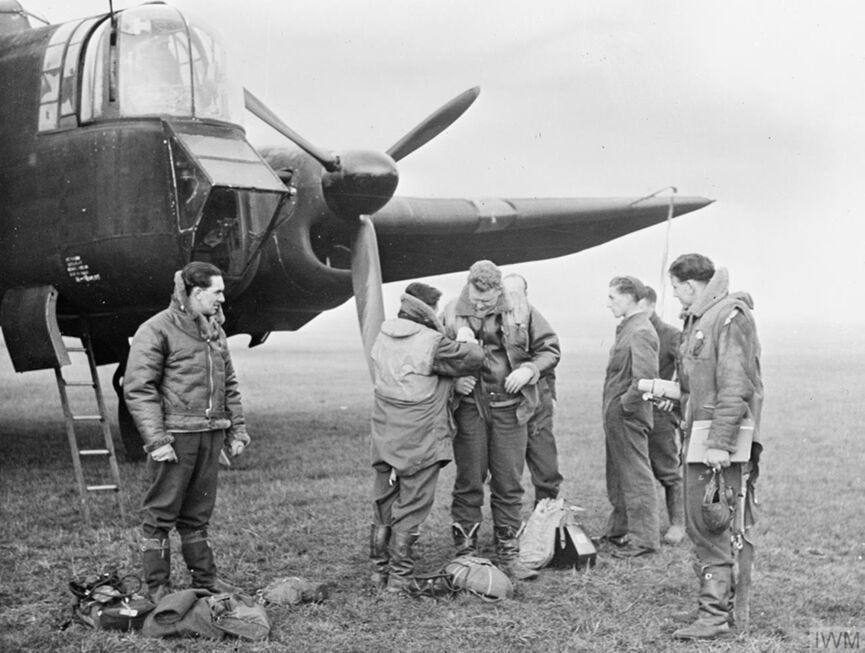
Italian foreign rhetoric was building and it was anticipated that the Mediteranean nation would enter the war within an Axis pact, and the forsight of the RAF to send bombers from No.4 Group, the only trained Night Bomber force in the world at that time, to the Channel Islands, (which put it within range of Italy) was as impressive as the speed of the German advance across Europe. And so with the offical declaration of war by the Italians, the specially selected 36 aircrews from squadrons, 10, 51, 58, 77 and 102, all took off from Gurnsey to execute a bombing raid upon one of several Italian cities. Turin, Genoa, and Milan all possessed factories identifed as targets for their industrial capacity to manurfacture war munitions and weapons. Turin home to the Fiat Mirafiori plant was the primary identified target. Fiat at that time posessed one of the most advanced aero engine testbeds, and indeed aero engine development programmes in the world. These were well known to the British as they had encountered very stiff competition from the Italian engine manurfacturers during the Schneider Trophy competitions pre war. If the Axis had access to these research laboritories, then the Italians could gain a technological advantage over Britain.
At 20:02, Wing Commander Staton, his navigator Flight Officer Prior and Sergeants Mathers, Broadhurst and Davis left Gurnsey and crossed the French coast with their two 500lb High explosive bombs at St-Cast Le Guildo, Brittany and flew towards Italy. The fine weather to which they had taken off from was not to be encountered across the French/Italian Alps. As the force passed Lyon they encountered a thunderous weather system. As they prepaired to climb to fly above the weather and the mountains, they encountered severe icing at 12’000 feet and were forced to fly lower through the storm. Another Whitley within the flight P.4947 recieved a lightning strike as they proceeded which resulted in the Radio operator having his hand burnt. The Operational records book of No.10 Squadron reveals that W/Cmr Staton, spent 65 minutes flying over “Target A” (Turin) firing multiple illumination flares trying to identify the correct part of the city before bombing commenced at 01:30 at a height of 4’000 feet. He reported no searchlights, and that “The Black-out was mediocre!” Indeed all of No.10 Squadrons aircraft reported severe icing on the way to the target and heavy cloud cover obscuring Turin, and some aircraft diverted to their alturnative target of the city of Genoa for bombing. The Ansaldo works were hit at around 01:15 from 15’000 feet and the crew of P.4955 reported “No AA fire or searchlights were encountered throughout this mission.” The black-out was reported as “very poor indeed!”
Despite the lack of anti-aircraft defences and a civilian black-out the operation was severly hampered by the bad weather. The weather was in fact so bad that one unidentified aircraft from the raid became lost and accidently mistook Geneva, Switzerland for Italy and bombed the city, killing 4 people and injuring 80 more. Another No.77 Squadron aircraft N.1362 crashed upon its homeward journey in the French town of Lignieres-Orgeres, near Le Mans killing all the crew. This was one of two aircraft lost upon the raid on Italy and of which did not return to Guernsey. Some of the Whitleys retuned as late as 5.30 am spending over eight hours in the air. Their return would not be for long though, as the Operational records show that all the aircraft left Gurnsey later that day to return to Dishforth and Topcliffe in North Yorkshire. Just two weeks later the Island would be within the hands of the Germans for the rest of the war.
This is where the Italian campaign took a sabatical, due in big part to the distance from England to Italy and the operational range of RAF bombers in service at that time. The RAF lacked the necessary long range heavy bombers needed to prosecute a target at that range with any vigour. Many of the largest bombers at that time such as the Avro Manchester, Handley Page Hampden and the Vickers Wellington were all medium bombers and the aforementioned Amstrong Whitworth Whitley. Whilst these bombers could reach Italy from Southern England, to do so they would be required to carry a very small bomb load and fly full to the brim with fuel and pray for good weather when crossing the Alps. Therefore at a time when Britain was under threat of invasion, other strategic operations such as mining of enemy waterways and bombing of ports was considered higher value to the war effort for less effort. Therefore conscious strategic targeting of Italian targets did not get undertaken from England until 1942, however throughout the back end of 1940, the RAF did hit some Italian targets such as the Caproni Aircraft factory at Taliedo, Milan on the night of 16/17th June 1940. Other notable dates within this period was the 18/19th August with the Innocenti machine plant, and Linate Airport targeted as well as the Pirelli rubber plant on the night of 18/19 December 1940, with bombers flying from the island of Malta, not England. This ad-hoc striking of Italy was carried forward through 1941 with the British based bombers committed to Western European targets, with limited raids taking place from Malta, and occasionally North Africa.
The turning point to the campaign came in 1942, when again the RAF was to revisit the Italian industrial triangle of Turin, Genoa and Milan as an strategic objective. This no doubt would have been a pleasant reply to the bombing to which Mussolini’s Corpo Aereo Italiano contributed to the German attacks upon Britain, in the Battle of Britain. However with the Italian bombers proven to be hopelessly vunerable to British air defences and of almost obsolessance quality, the RAF now had the tools to pack the punch they needed to send a message back to Mussolini with their heavey bombers.
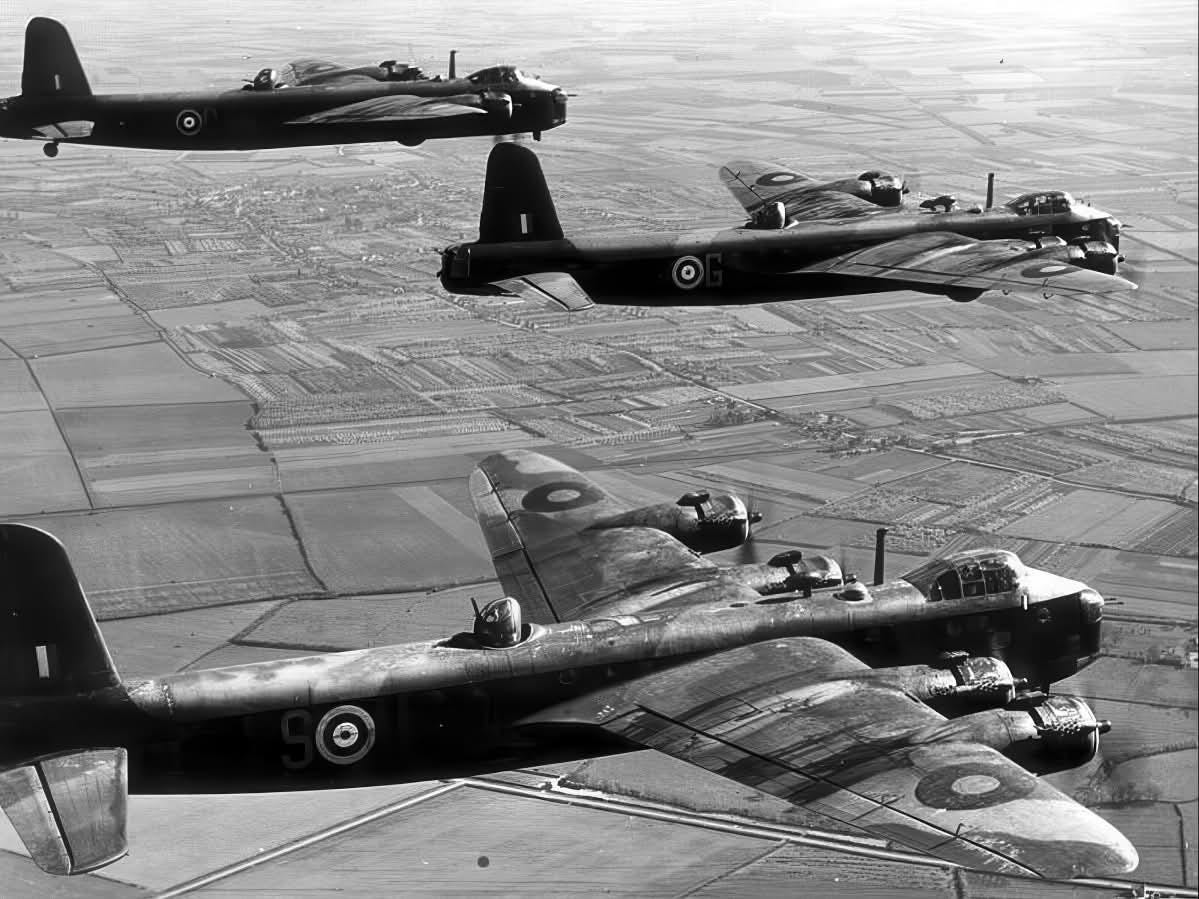
No. 620 Squadron which flew from RAF Chedburgh, in Suffolk were congratulated by their AOC, on the quality of their aerial bombing as determined from target photographs from their 12th August raid on Turin. The target had been bombed in near perfect moonlight, with 20 Sterlings from Chedburgh delivering a mix of 1’000lb and 500lb high explosive and incendary bombs over the target. Unfortunatley two crews failed to return. Eye witness accounts in France suggest two Sterlings fell to the guns of a German night fighter with burning aircraft seening seen falling to earth at around midnight at La Bussiere-Sur-Ouche and Veuvey in the Cote d’Or region. Despite the ever-present German nightfighters defending French terratory, the Italian raids were increasingly considered easy trips compaired to the targets inside the heavily defended Rhur of Germany. Despite this, crews were always encouraged to make use of Window (Chaff) to confuse the German radar operators as they transited France. However we must bear a thought to an Alsatian hound whos master failed to return from the August 12 raid on Turin. After several days of residing by the Chedburgh dispersal caravan patiently waiting for his master to return and refusing to eat despite the groundcrews efforts. After the dog became aggressive and unapproachable, the tough decision was made for ‘Dutch’ Holland’s ( No.620 Squadron) loyal friend to be distroyed for its own sanity. The dog was another unfortunate victim of the German night fighter who bought down Sterling EF390 that night.
On the night of 22nd and the 23rd October 1942, 130 RAF heavy bombers consisting mainly of Sterlings and Lancasters attacked Genoa. The following night 150 bombers including 73 Lancasters struck Milan. The 135 tons of bombs dropped caused deverstation with 30’000 incendaries starting widescale fires within the 441 buildings hit which included the San Vittone gael. Two train stations were also damaged and the raid was responsible for 171 deaths and around 300 wounded. Perhaps the greatest effect was the widespread panic and terror amongst the population who were unaccustomed to being bombed. This had led to poor disapline in black-out and air-raid precautions. Italian air defence was light and many of the 10 aircraft lost including 4 lancasters were thought to be from mechanical malfunction, any fortunate light calibre anti-aircraft fire and mischevious German night fighters.
If the Italian population believed these raids to be short lived they were wrong. For the following month, the RAF flew regular consistant raids upon Italy from Britain. On the 6th November 65 aircraft struck Italian industry, the following night of 7th November Genoa recieved another heavy attack of 175 bombers. On the 13th, 15th and 18th November around 80 bombers prosecuted attacks keeping the pressure up upon Il Duce.
Good weather over the Alps on the night of the 19th/20th November, bought a bomber Command operation which was to be deadly. Flying from aerodromes in England, bombers took over 10 hours to hit Turin and return. The raid left 117 dead and another 120 wounded, and by this time the city had seen many women and children voluntarily evacuate their homes. Another heavy raid of 250 bombers on the 28th November followed by another raid the following night ended the most deadly month for the Torinese.
Mussolini addressed the Chamber of Fasces and Corporations on the 2nd December 1942, and recognised the Allied bombing of Italian cities he said;
“We must get the population out of the cities, above all the women and children. And we must organize a total evacuation, or almost total. It is the duty of all those who can find a place to live far from the urban and industrial centers, to do so.
Then we must organize evening departures so that only the combatants shall remain in the city at night, namely, those who have the civic moral obligation to remain there. It will then be easier to make a sufficient number of shelters more enduring than those which we have at present-for which we have spent hundreds and hundreds of millions, but which, if hit directly, cannot withstand bombs of very heavy caliber.”
Indeed the threat of bombing was now well understood by the Italian government. Their poor preperations for air defence had left the people of Italy at the mercy of bombing raids across the country. Local authorities did all they could to alleviate civilian casualties and their plight is reported within the Turin Firefighters Archive. The December 8th 1942 report says:
“With the firefights, as ordered, we were directed to Murazzi Po; when arriving at No 18, Corso San Maurizio, the enemy planes that have already dropped incendary rockets, started dropping fragmentation bombs. We tried to calm down the people who were inside the shelter, and by breaking a wall, we came out from another passage connecting with the garden. We were able to bring under control the fire. All the firefighters worked with zeal and goodwill, recieving the approval of the bystanders.”
And so as 1943 began, the raid on Italy continued with several raids taking place in February on Turin, with the coastal port of La Spezia targeted in April. Several more raids took place in June, with 250 aircraft attacking Turin again on the night of June 12th. These raids were targeted to support Operation Huskey, the invasion of Sicily taking place the following month of July. August was possibly the zenith of Bomber Commands effort upon Italy. Five huge raids were mounted in that month ranging from 150 to 200 bombers attacking Milan, Turin and new targets too such as Foggia and Naples.
On the night of August 12/13th one very special Sterling EF452 left RAF Downham Market in Norfolk to stike Turin flying alongside a stream of RAF Halifax’s going to Milan. At the controls of the 218 (Gold Coast) Squadron Sterling was 21 year old Flight Sergeant Arthur Louis Aaron, RAFVR. The Sterling he commanded sucessfully crossed the Alps, and turned for Turin. As they began their bombing run, a deverstating burst of machine gun fire ripped through the Sterling. With three engines hit and the elevator control damaged, the aircraft recieved another attack from the predatory night fighter. This time the front gun turret was hit and bullets killed the navigator. A damaged engine sprung aflame and the aircraft became hard to control. Flt Sgt Aaron had also been hit. He had recieved a deverstating wound to his jaw in which part of it had been ripped away. He had also been hit in the chest and he was unable to use his right arm which had also recieved a bullet wound through the shatted windscreen. Aaron slumped over his control column, which pitched the Sterling into a violent dive. The Flight Engineer was able to climb into the cockpit and recover the aircraft at 3’000 feet after Aarons body had been moved. From the floor of the cockpit, Aaron using just hand signals, as he could not speak directed the Bomb aimer in how to fly the aircraft whilst a course was set due south for the either sicily or North Africa. As the now stabilised aircraft flew on, Aaron was moved by his crew to the less cramped rear of the Sterling where they attempted to perform first aid upon him. He was given morphine and his face was bandaged. After resting a while, he insisted he return to the cockpit, where he was lifted into the pilots seat, and feet places upon the rudder pedals. After twice attempting to control the aircraft, it was evident he was too weak to control the mighty Sterling. Instead of leaving the cockpit, he sat providing hand writen messages to the crew with his left hand. After flying for five hours after leaving Turin, the runway flare lights of Bone Airfield ( Annaba Rabah Bitat Airport today in Nothern Algeria) came into sight as the Sterlings fuel became concernedly low. Aaron summoned his reserves of energy to stand and instruct the Bomb aimer in how to perform a wheels-up landing. In the darkness and with an unexperianced bomb aimer in control four landing attempts were made, but upon the fifth and final attempt Aaron collapsed and the make shift pilot crashed the Sterling into the North African soil. Despite being immediatly recovered to the airfields medical facilites, Flt Sgt Aaron passed away from his injuries at 6am in the upcoming morning light. His physical strength, courage and steadfast ability to command the aircraft whilst being severely injured was recognised with a Victoria Cross awared to him posthumously on the 5th November 1943. Flight Sergeant Aaron’s Victoria Cross is displayed at Leeds City Museum, his home town.
[The citation for Aarons Victoria Cross was writen by the London Gazette in November 1943, and since its publication details of the night have been revised and facts now suggest Aarons sterling that night was not attacked by an enemy night fighter (as they had not been encountered over Italy) but had been a victim of a friendly fire incident in which a fellow Sterling in the bomber stream mistook the bomber for a night fighter and enflicted the damage upon it. ]
With the end of facist Italy and its impending liberation, RAF bombing raids from England withered. With the Battle for North Africa won, American and British bombing operations were able to commence from North Africa and this surpassed the efforts made from Britain, which cut out the dangerous flight across Occupied France and the Alps. Whilst Rome had been purposly avoided by the Allies for its historic and cultural significance, it too recieved aerial attacks. Its final raid was the day before it was declaired an open city, August 14, 1943. Rome was captured by the Allies on June 4, 1944.